
The New Zealand Institute of Advanced Technology is tasked with quadrupling the contribution to NZ’s GDP from high-tech industries over the next 10 years.
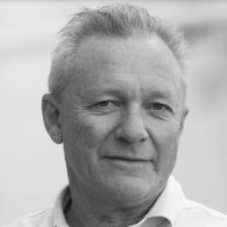
Its new chief executive Roman Reyhani has the job of making that tough assignment a reality. It means putting into place the Government’s push to extract more economic and commercial benefit from scientific research.
The Government has allocated $231 million over four years to establish the NZIAT with the funds controversially drawn away from other areas of the science sector, including the Marsden Fund.
When Reyhani talked to BusinessDesk he was very much the new guy, on day two of the job.
A graduate of the University of Auckland’s Law School, Reyhani is a returning New Zealander with a distinctive North American twang.
“One of those funny little souvenirs I got from 20 years in the US.”
That included six years at BCG (Boston Consulting Group) in a venture building division. Rehani was involved in industrial goods and energy, which included deep tech, mining, and EV battery builds.
A blank-sheet approach
Over the next few months, the NZIAT will work with the Government to thrash out how funding will be deployed and the conditions attached to it. That means learning from what has and hasn’t worked overseas.
“We want to make sure that when we do provide capital, that there is a real demand-side pull for the technology,” Reyhani said. “Otherwise what we’re doing is providing funding for great research, but there may not necessarily be a market for it, or a market that’s large enough for it.”
According to Reyhani, there isn’t any close equivalent to the NZIAT overseas, although there are of course comparable elements in other countries.
“We want to take a blank-sheet view of this and go to first principles, and say what does New Zealand need here? What are our problems and challenges when it comes to commercialising technology?”
First of all, it will need to reverse a decline. According to Tech NZ’s most recent annual survey, from 2025, the technology sector contributed $24.5 billion towards GDP in 2025 compared with $24b in 2024, an increase at roughly the rate of inflation.
However, the number of tech firms fell by 2.8% from 2024 to 2025, a decrease of 603 digital technology firms and 48 high-tech manufacturers.
Wellington was the worst affected, with an 8.8% decline, which Tech NZ attributed to a fall in small contractor firms as the Government reduced its tech workforce. Only Christchurch grew, by 0.3%.
The ghost of Callaghan past
The NZIAT’s goals are broadly comparable with those of Callaghan Innovation when it was established in 2013. Callaghan’s mandate was to accelerate the commercialisation of innovation in NZ businesses.
Just 11 years later, the Science System Advisory Group (SSAG) recommended winding it up, arguing the merger of a research and service unit with the functions of an innovation function might have been flawed from the beginning.
It stated that Callaghan Innovation had itself realised it hadn’t succeeded in driving innovation or attracting investors and capital.
Reyhani said he didn’t want to “Monday morning quarterback” Callaghan Innovation, given the effort put into the venture. The positive outcome was that NZ had gone down one path, then realised it needed to do something different.
“That’s how all great businesses are run. If something isn’t working you have to find that fresh direction and I think that’s what we’re doing right now.”
In contrast, the NZIAT won’t be carrying out any in-house research or directly funding startups businesses.
Bigger cheques, more concentrated
Reyhani said the NZIAT would need to take a more targeted approach and concentrate on key technology platforms. That meant deploying more capital in those areas rather than spreading small cheques across a broader range.
“The money that gets deployed has to be something where there’s going to be a clear return back to New Zealand.”
Reyhani suggested that mechanisms and levers needed to be in place to ensure that value did come back to NZ, given the pressures for successful companies to go offshore. No such measures had been set in stone as yet.
“They’re not penalties. There would be terms in the agreement that if you took funding … and if you redomicile there would be some additional payback for the funding that was provided and I think that’s only fair.”
Building ‘growth engines’
The institute will focus on three technology areas – quantum, AI, and future magnetic and materials technologies.
One of the key concepts is building so-called “growth engines” in these fields. What they will look like and how they will function is a work in progress.
A fourth target area is “foresighting”, which means attempting to see opportunities for NZ that lie just below the horizon. Reyhani said that meant keeping an ear to the ground and looking for the unexpected.
“I don’t think aerospace 20 years ago would have been something New Zealand thought that it had the right to be playing in, and we’re one of the global leaders in that now.”
A Magnetic and Materials Platform was officially launched last year with $71m of repurposed science funding, and interim management going to Paihau-Robinson Research. From next year NZIAT will take charge of developing that platform.
While the money has been allocated, the shape and direction of the platform is yet to emerge.
Clues to the road ahead
The AI platform will be funded with up to $70m over seven years. At present, five shortlisted proposals have received $250,000 to develop their concept of the platform.
Those proposals provide clues as to what NZIAT “growth engines” might look like across the board.
The University of Auckland proposal, the Aotearoa Agentic AI Platform (AAAIP), states that it will “augment our population of 5 million New Zealanders with 100 million AI assistants, creating a wealthier and fairer country”.
Rather than wait for human inputs, the next generation of AI agents – delivered by AAAIP with industry input – would learn and maintain themselves and act as a productivity multiplier.
The BioAI platform of the Bioeconomy Science Institute (BSI) would drive practical innovation in agriculture, aquaculture and forestry and deliver a 12:1 direct impact return on $70m, plus billions in projected exports and market access.
Wētā FX would lead an institute built on the company’s years of R&D investment into AI, to be shared with NZ’s research and business communities, with benefits for manufacturing processes, medical imaging and environmental research.
Fast and slow progress
While many technologies might need 10 years of funding to produce something that could be commercialised, AI needed a different approach, Reyhani said.
“The market moves so quickly than by the time you’ve discovered something it needs to be in the market six months later. So, we have to be malleable and adaptable based on the underlying technology that we’re deploying capital into.”
Quantum technologies, on the other hand, relied very much on long-term investments, and the NZIAT needed to determine how to invest into it.
“We’re not going to be building a quantum computer here, that’s an IBM task or a Google task. But there are capabilities and research and technology that’s certainly world-leading and that might find its way into some of the various technologies overseas.”
The shift to advanced technology
Last April a report recommended reprioritising existing science funding towards advanced technology, at the expense of Earth Sciences and the BSI in particular. It was well received in some quarters, but not everywhere.
Auckland University of Technology associate professor and chair of the AI Forum NZ Mahsa McCauley said the report delivered the strategic reset NZ’s science system urgently needed.
The Independent Research Association of NZ (IRANZ) and KiwiNet were also positive.
However, the NZ Association of Scientists responded that the research system would “buy lottery tickets” in areas of technology NZ had mostly neglected, while cutting enduring strengths like agriculture and horticulture.
Reyhani said the NZIAT would take a methodical, disciplined and stage-gated approach.
“I don’t think any of this is a lottery ticket. We’re not writing a big cheque and hoping and praying ... and saying, ‘here you go, have at it’.
“It’s that agility that really makes this the exact opposite of a lottery ticket and something that’s more of a disciplined, investor-led approach.”
NZ at a crossroads
Reyhani said NZ had reached an inflection point where things could change dramatically for the better in the next 10 to 20 years.
“Look at some of the other small states that have turned themselves into technology powerhouses. Singapore, Taiwan, Israel, some of the European countries. There’s no reason we can’t be doing that.”
Several of those examples spend considerably more than NZ on science as a proportion of GDP. Will the NZIAT have to run on the smell of an oily rag?
“No, I’m grateful for everything the Government has provided us right here. If we prove ourselves then there’s always potential to make a case for changes in the funding.
“Right now, I think this is a really great and generous amount of capital.”